

Rubio: US must clarify mandate of Gaza force before we can expect countries to send troops
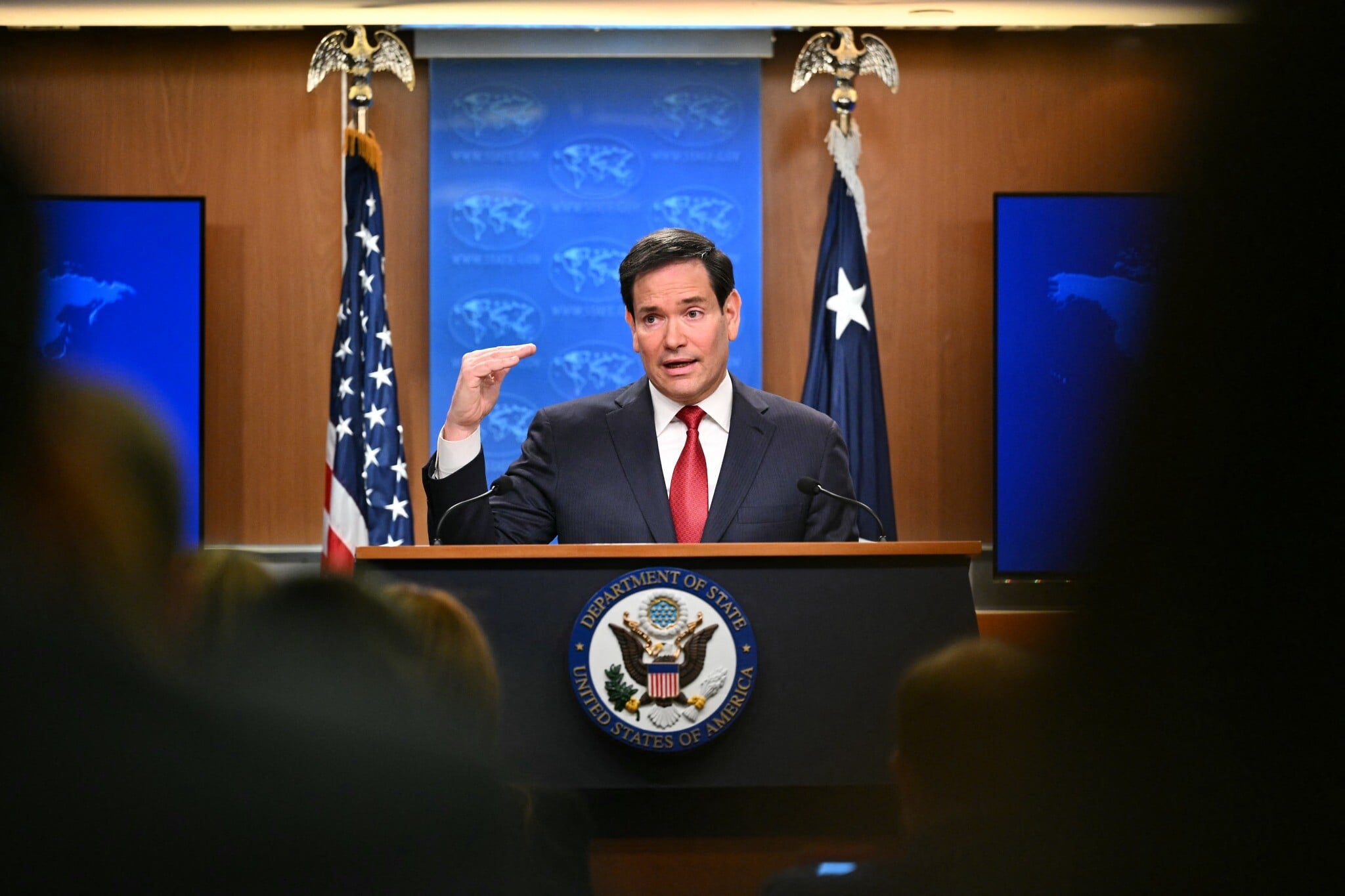
US Secretary of State Marco Rubio said Friday that the Trump administration will have to clarify the mandate of the International Stabilization Force before it can expect to secure troop commitments from participating countries, as it struggles to find countries willing to contribute troops to the force.
“In fairness to all the countries we’ve talked to about having a presence on the ground, I think they want to know specifically what the mandate will be and what the funding mechanism,” Rubio said during a press conference when asked whether the US has secured a commitment from Pakistan, which is reportedly under American pressure to contribute soldiers to the foreign force that will be tasked with gradually phasing the IDF out of Gaza and securing the enclave.
“We’re very grateful to Pakistan for their offer to consider being a part of it, [but] I think we owe them a few more answers before we can ask anybody to firmly commit,” Rubio added.
“I feel very confident that we have a number of nation states acceptable to all sides [that] are willing to step forward and be a part of that stabilization force,” he declared.
Two Western diplomats familiar with the situation told The Times of Israel on Friday that among those Rubio has asked to contribute troops to the force is Ethiopian Prime Minister Abiy Ahmed Ali.
“We’re trying to make a lot of progress here. The next step is announcing the Board of Peace, announcing the Palestinian technocratic [committee] that will help provide daily governance,” Rubio said at the press conference.
“Once that’s in place, that will allow us to firm up the stabilization force, including how it’s going to be paid for, what the rules of engagement are, what their role will be in demilitarization and so forth,” he said.
The full implementation of phase two will likely take two or three years, according to Rubio. The Palestinian Authority is hoping to take over management of Gaza from the Board of Peace in a shorter timeframe.
‘What disarmament needs to look like’
The top US diplomat appeared not to rule out the possibility that the US will pursue a Hamas disarmament plan that differentiates between heavy and light weaponry.
“I’m not going to get into the details of those types of negotiations,” Rubio said after being asked if the US is prepared to accept the terror group’s reported willingness to give up its heavy weapons while holding on to its lighter ones.
“I would just ask everyone to focus on what are the kind of weapons [and] capabilities that Hamas would need in order to threaten or attack Israel as a baseline for what disarmament needs to look like,” he added.
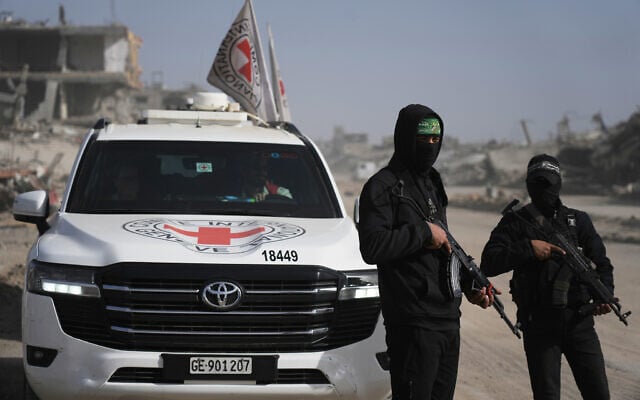
“If Hamas is ever in a position in the future that they can threaten or attack Israel, you’re not going to have peace,” he said. “You’re not going to convince anyone to invest money in Gaza if they believe another war is going to happen in two, three years… That’s why disarmament is so critical.”
“What that entails, we’re going to leave that to the technical teams to work on. It would have to be something that our partners can pressure them to agree to. It also has to be something that Israel agrees to for that to work,” he added.
UNRWA ‘unsalvageable,’ Gaza aid possible without it
In further remarks on Gaza, Rubio said Washington believes that humanitarian aid can be delivered without the embattled UN agency for Palestinian refugees, UNRWA, which has been banned by Israel over accusations that employees of the agency had participated in the October 7, 2023, attack by Hamas, and incited against it.
“UNRWA is a corrupted organization that’s unsalvageable. Period,” Rubio said when asked about reporting that the US is considering sanctioning the agency, which has members proven to have ties with Hamas.
Asked about Israel’s failed September strike targeting Hamas’s leadership in Doha, Rubio said it “set in motion a sense of urgency to bring [the Gaza war] to an end before it spread.”
“What brought Hamas to the table — among other things — was the fact that some of the countries that had relationships with Hamas — like Qatar, like Turkey — played a very constructive role in bringing them to the table and pressuring them to sign an agreement,” he continued.
“We played a similar role on the other side,” Rubio said, referring to US pressure that was brought to bear on Israel to agree to a ceasefire in October.
Mediators hold phase 2 talks in Miami
Rubio’s remarks at Friday’s press briefing came as US Special Envoy Steve Witkoff was hosting senior Qatari, Egyptian, and Turkish officials in Miami on Friday to discuss phase two of the Gaza ceasefire.
The four countries believe that both Israel and Hamas are dragging their feet to avoid implementing the deal’s second phase, and are eager to decide on a joint approach for getting both sides to move forward, according to a report in the Axios news site, which was later confirmed to The Times of Israel.
The meeting, the highest-level gathering of mediators since the Gaza ceasefire went into effect in October, was attended by Qatari Prime Minister Mohammed bin Abdul Rahman al-Thani, Turkey’s Foreign Minister Hakan Fidan and Egyptian Foreign Minister Badr Abdelatty.
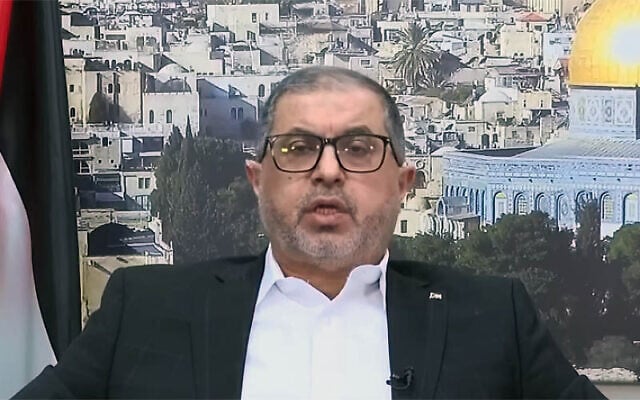
Ahead of the Miami talks, top Hamas official Bassem Naim said Friday that they must aim to end Israeli truce “violations” in the Palestinian territory: “Our people expect these talks to result in an agreement to put an end to ongoing Israeli lawlessness, halt all violations and compel the occupation to abide by the Sharm el-Sheikh agreement.”
Naim said the talks should also address “how to implement the remaining elements of the Trump plan in a way that achieves sustainable stability, launches a comprehensive reconstruction process and paves the way for a political track enabling Palestinians to govern themselves, culminating in a fully sovereign and independent state.”
The gathering came ahead of an expected meeting between Prime Minister Benjamin Netanyahu and US President Donald Trump at Mar-a-Lago later this month to discuss, among other issues, the Gaza ceasefire.
Under the second stage, Israel is supposed to withdraw from its positions in Gaza, an interim authority is to govern the territory instead of Hamas, and an international stabilization force is to be deployed.
But progress in moving to that phase of the agreement has so far been slow, while the ceasefire remains fragile with both sides alleging violations. Israel killed senior Hamas commander Raed Saad in Gaza last weekend, a move that reportedly sparked Trump to warn of jeopardizing the truce.
Rubio weighs in on Lebanon, West Bank
Rubio touched on other issues concerning Israel besides Gaza at Friday’s press conference, including the fragile ceasefire in Lebanon, as he was asked whether Washington expects the latest round of direct talks between Israeli and Lebanese authorities to lead to an agreement or another round of conflict.
“We are hopeful that the talks between Lebanese authorities and the Israelis will create outlines and a way forward that prevents further conflict,” Rubio said in response, acknowledging that Israel has pledged to continue taking military action against Hezbollah if it feels threatened. Israeli and Lebanese officials met for direct talks on maintaining the ceasefire in the southern Lebanese town of Naqoura earlier Friday.

Rubio also indicated that the US is privately pressing Israel to crack down on the rampant, largely unchecked settler violence which has continued unabated in the Palestinian territory.
“Our embassy has put out statements and comments about specific incidents [in the West Bank] that we’re concerned about [and] that create a point of strong friction in the broader effort,” Rubio said after being asked about the issue.
“Ambassador [Mike] Huckabee has spoken to this as recently as a couple of weeks ago, very firmly, I believe,” he added, apparently referring to the US envoy’s characterization of the violence as terrorism.
“We’ll continue to communicate that as we have and make our opinion known in regards to its impact on the broader challenges,” Rubio said.
